Views: 0 Author: Site Editor Publish Time: 2026-07-31 Origin: Site
Walking through a commercial building or stepping into a beautifully crafted home, you expect doors to open effortlessly. Yet, a sagging door shatters this experience instantly. It creates loud scraping noises, resists latching properly, and damages underlying floor surfaces. This common hardware failure causes daily frustration.
Door sag represents a compounding mechanical issue rather than a simple cosmetic flaw. Misaligned latches, ruined flooring, and compromised fire compliance often result from ignoring the problem. Continuous dynamic loads cause standard friction hinges to grind down over time. This continuous wear results in a permanent structural drop. Security risks emerge when doors fail to close fully. Energy bills increase as drafts enter through uneven frame gaps.
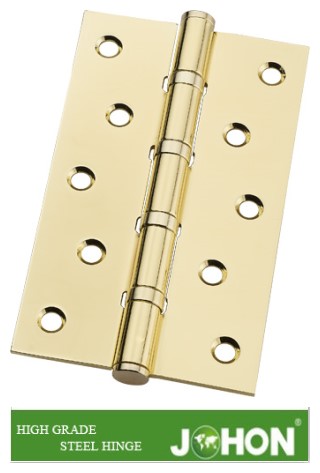
Fortunately, upgrading your hardware solves this costly problem immediately. You can introduce ball bearing butt hinges as the definitive mechanical standard for heavy and high-traffic doors. These specialized hardware pieces are specifically designed to distribute vertical load safely. They completely eliminate the metal-on-metal friction responsible for premature hardware degradation. You will learn the physics behind these mechanisms, how to choose the right specifications, and best practices for flawless installation.
Standard hinges fail under heavy loads due to constant metal-on-metal friction wearing down the knuckles.
Ball bearing mechanisms permanently lubricate and separate the knuckles, smoothly carrying both vertical and lateral weight.
Upgrading to heavy duty ball bearing hinges is the most cost-effective preventative measure for high-traffic or solid core doors.
Selecting the correct size (e.g., matching door thickness to 5 inch door hinges) and material is critical to preventing premature failure.
Understanding hardware failure requires a close look at structural physics. Standard hinges rely entirely on their interlaced knuckles rubbing directly against one another. They handle the entire gravitational pull of the door leaf. Over time, the constant swinging motion acts like sandpaper. It aggressively wears down the softer metal surfaces. Metal shavings accumulate, and the knuckles begin to compress. This structural degradation causes the door to physically drop out of vertical alignment.
You can clearly observe the anatomy of this standard hinge failure over months or years. The top hinge endures the most lateral pull, while the bottom hinge supports the most vertical compression. When these plain bearing knuckles grind together, they lose critical mass. Even a millimeter of lost metal at the hinge translates to a massive drop at the strike plate. This uneven geometry strains the jamb and damages the latch mechanism.
Adding ball bearings fundamentally changes the physics of door suspension. Manufacturers insert permanently lubricated bearing assemblies between the knuckles. These small steel spheres separate the metal barrels completely. They transform grinding sliding friction into smooth rolling friction. The bearings act as miniature shock absorbers. They capture the dynamic load when you quickly yank or slam the door.
Load distribution improves drastically once you make this structural upgrade. The bearings effectively mitigate the downward gravitational pull leading to sagging. They create an incredibly low friction coefficient. This means the heavy slab swings effortlessly. They handle both radial loads and axial loads simultaneously. Radial load refers to the lateral pulling weight. Axial load refers to the direct downward pressure. Standard options fail at managing high axial loads, but ball bearing units thrive under these exact conditions.
Always replace all hinges on a single door at the same time to ensure even load sharing.
Use standard 2-ball bearing hinges for interior residential doors under moderate use.
Step up to 4-ball bearing hinges for exterior entryways and dense commercial slabs.
Not every door requires industrial hardware, but recognizing when an upgrade is necessary saves time and frustration. You must evaluate the specific weight and core type of your doors. Hollow-core interior residential doors weigh very little. Standard hardware often supports them adequately for years. However, solid core, commercial, or heavy wood doors demand a vastly different approach. You should select heavy duty ball bearing hinges for these dense applications. Thicker gauges of metal and increased bearing counts provide the necessary structural rigidity.
Traffic frequency plays a massive role in hardware deterioration. Industry professionals measure door life in "cycles." One cycle equals opening and closing the door once. A residential bedroom typically sees three to five cycles daily. A high-traffic commercial entryway may see 10–20 cycles daily, with specialized facilities (e.g., hospitals, airports) reaching up to several hundred. High cycle counts accelerate friction wear exponentially. Evaluating traffic volume helps you correlate hinge selection directly to usage demands.
You can identify warning signs on existing doors long before total failure occurs. Physical indicators prove your current hinges are deteriorating under the weight. Look for fine, dark graphite dust accumulating directly beneath the knuckles. This dust consists of actual metal shavings mixed with factory grease. Check the gap at the header of the door frame. An uneven gap, wider at the latch side and tighter near the top hinge, signals imminent structural drop.
Binding at the strike plate serves as another verifiable indicator. When you struggle to turn the deadbolt or hear the latch scrape against the metal receiver, the door has already sagged. You will often notice scuff marks on the flooring beneath the sweeping edge. Recognizing these early signs allows you to intervene before the wooden frame suffers permanent damage.
Table: Traffic Capacity and Hinge Recommendation
Application Type | Estimated Daily Cycles | Door Core Material | Recommended Hinge Specification |
|---|---|---|---|
Residential Bedroom | 10 - 30 | Hollow Core | Standard Plain Bearing |
Residential Exterior Entry | 20 - 50 | Solid Wood / Fiberglass | 2-Ball Bearing Standard Weight |
Office Interior / Retail | 100 - 400 | Solid Core MDF / Aluminum | 4-Ball Bearing Heavy Duty |
School / Hospital Corridor | 500+ | Steel / Lead-lined | 4-Ball Bearing Extra Heavy Gauge |
Choosing the correct dimensional matrix dictates the long-term success of your installation. Hinge sizing relies on straightforward mathematical guidelines. For standard residential doors measuring up to 36 inches wide and 1-3/8 inches thick, standard 3.5-inch or 4-inch hinges typically suffice. They provide enough knuckle surface area to anchor into the jamb safely.
However, structural requirements change rapidly as dimensions increase. When door width exceeds 36 inches, or thickness surpasses 1-3/4 inches, stepping up to 5 inch door hinges becomes strictly necessary. A wider door creates a longer lever arm. This longer lever dramatically amplifies the lateral pulling force against the top hinge. Taller and wider hardware spreads this extreme force across a larger surface area of the wooden frame.
Material yield strength directly impacts the prevention of door sag. Base materials differ widely in their performance characteristics. We must evaluate them neutrally based on strength, aesthetics, and environmental resistance.
Stainless Steel: This material offers the highest strength-to-weight ratio. It resists bending and knuckle compression exceptionally well. It remains highly corrosion-resistant, making it perfect for exterior, high-humidity, or coastal environments. It handles extreme heavy loads without buckling.
Solid Brass: Brass provides superior aesthetic appeal. It polishes beautifully and resists rust effectively. However, brass remains a significantly softer metal than steel. It requires thicker metal gauges to prevent bending under heavy weight. It serves beautifully for decorative entryways but needs careful sizing.
Steel: Standard steel options prove highly cost-effective and structurally rigid. They bear heavy loads efficiently. Unfortunately, basic steel rusts quickly if exposed to exterior moisture or damp basement environments. You should reserve them primarily for climate-controlled interiors.
Proper sizing prevents premature failure in massive custom entryways. When dealing with oversized architectural designs, you must specifically seek out heavy wood door hinges. These robust variants feature thickened metal leaves specifically forged to resist bending under hundreds of pounds of solid mahogany or oak.
Using 3.5-inch hardware on standard 1-3/4 inch thick exterior slabs.
Ignoring the weight of added hardware like heavy smart locks and metal kickplates when calculating total load.
Mixing different sizes or metal gauges on the same door frame.
Hardware upgrades involve precise implementation realities. Retrofitting superior hardware into existing frames requires careful attention to detail. Heavy duty ball bearing variants utilize thicker gauge metal than standard builder-grade hardware. This increased thickness directly impacts the mortise depth on the door edge and the wooden jamb.
You must address mortise depth adjustments immediately during installation. If you install thicker hardware into shallow cutouts, the metal plates will sit "proud" or raised above the wood surface. Proud hinges bind against the frame when the door closes. This binding exerts enormous pressure on the screws and the knuckles. It forces the door out of alignment and prevents smooth latching. You will likely need to deepen the existing mortises slightly using a sharp wood chisel or a dedicated router.
Co-axial alignment represents another critical risk factor. Vertical alignment dictates how smoothly the bearings function. All three or four hinges must share the exact same vertical axis. If you install them out of plumb, the bearings will bind aggressively against the internal knuckle walls. This binding accelerates wear rapidly. It defeats the primary purpose of upgrading to a frictionless system. You must ensure the frame itself sits perfectly plumb before anchoring the hardware.
We strictly advise following the "Rule of Hinge Count." This industry standard dictates using one hinge for every 30 inches of door height. A standard 80-inch door requires three hinges. A taller 90-inch or 96-inch architectural door requires four hinges. This rule ensures the load is adequately shared across the entire vertical span of the jamb. Skipping this rule concentrates too much weight on the top hinge, pulling the anchoring screws out of the wood.
Screw anchoring holds equal importance. The strongest hardware fails if anchored poorly. You should discard the short screws included in basic kits. Instead, use hardened steel screws measuring at least 2.5 to 3 inches long for the jamb side. These longer fasteners penetrate deeply through the aesthetic jamb and bite securely into the structural king stud of the wall. This structural connection permanently prevents the frame side from sagging outward.
Evaluating your hardware choices requires looking past initial price tags. You must acknowledge that specialized ball bearing butt hinges cost more upfront than standard friction variants. However, comparing this initial purchase price against the lifecycle value reveals a clear economic advantage. Cheaper alternatives degrade quickly under heavy dynamic loads.
When basic hardware fails, you face recurring labor costs. You will spend hours continuously adjusting sagging doors to make them latch properly. You might need to hire carpenters to plane door edges that scrape the floor. You risk replacing damaged strike plates or deeply scarred hardwood flooring. Investing slightly more upfront entirely eliminates these frustrating downstream repair expenses. High-quality bearing hardware easily outlasts the architectural lifespan of the door itself.
Specifiers and buyers should follow strict shortlisting logic during the evaluation phase. Look for specific features that guarantee long-term stability.
Non-Removable Pins (NRP): Always choose NRP variants for outswing exterior security doors. The pin features a hidden set screw accessed only when the door is open. This prevents intruders from tapping the pin out and removing the door from the outside.
ANSI/BHMA Grade Certifications: Look for Grade 1 or Grade 2 certifications for commercial or heavy residential applications. These industry standards certify that the hardware has passed rigorous high-cycle and heavy-weight load testing.
Proper Finish Matching: Ensure the final plating or coating matches your existing handles and architectural consistency. High-quality hardware offers durable finishes that resist tarnishing and scratching.
Your next steps involve careful measurement before making a purchase. Measure your current hinge radius to determine if you need square corners, 1/4-inch radius, or 5/8-inch radius corners. Measure the exact height and width of the existing metal plates. Check the mortise depth on the jamb. Armed with these precise dimensions, you can accurately source the correct replacements without facing installation delays.
Preventing door sag is fundamentally an exercise in applied physics. You can easily solve this compounding issue by choosing the right hardware upfront. Heavy doors subject their hardware to immense downward pressure and lateral pulling forces. By upgrading standard friction options to bearing-equipped variants, you introduce permanent lubrication and efficient load distribution into the equation.
Matching the door's specific weight, width, and traffic level to the appropriate hardware specification remains the definitive fix. Always evaluate whether you need standard dimensions or thicker 5-inch upgrades for oversized entryways. Ensure your structural anchoring reaches the wall studs, and verify perfectly plumb alignment during installation to maximize hardware lifespan.
We encourage you to audit your problematic doors today. Look for scraping sounds, misaligned latches, or graphite dust near the knuckles. Measure your exact dimensions, evaluate your frame's structural integrity, and browse professional hardware catalogs to select the perfect long-term replacements.
A: Not recommended. Mixing hinge types forces the ball bearing hinge to carry a disproportionate load, leading to premature failure and binding. Replace all hinges on a single door simultaneously.
A: Most high-quality ball bearing hinges are factory-greased and sealed for life. Adding aftermarket liquid lubricants can sometimes attract dust and grit, degrading the bearing over time.
A: A standard-weight, 3-hinge setup typically supports up to 80–150 lbs depending on the manufacturer. For doors exceeding this, heavy-duty variations (thicker gauge metal, more bearings) are strictly required.
A: Hinge hardware is only as strong as its anchor. If the screws are stripped in the wood jamb, or if the frame itself is not plumb, the door will sag regardless of the hinge quality. Check for structural framing issues or use longer screws to anchor into the king stud.
 English