
Views: 0 Author: Site Editor Publish Time: 2025-11-25 Origin: Site
Hinges are an essential component in the design and function of doors, cabinets, gates, and countless other products. The material used for the hinge can significantly impact not only the performance and durability but also the aesthetic appeal of the product. Selecting the right hinge material is crucial to ensure that it meets the requirements for both functionality and style in your design.
Before diving into materials, it’s important to understand what hinges are and their role in design. A hinge is a mechanical device used to connect two objects, allowing them to pivot and rotate relative to each other. Common examples of hinges include door hinges, gate hinges, and cabinet hinges. They enable smooth, controlled movement, providing both functionality and support for the attached components.
Hinges can be made from a variety of materials, each offering different benefits depending on factors like the environment, load-bearing needs, and aesthetic preferences. The material you choose for your hinge will play a large role in determining its strength, resistance to wear and tear, and appearance.
When selecting the right hinge material, there are several key factors to consider:
The hinge must be able to handle the weight of the object it’s supporting. For example, a heavy-duty door hinge requires a stronger material than a lightweight cabinet hinge. You must consider whether the hinge will be subjected to high or low loads, as well as how often it will be used.
In environments where the hinge will be exposed to moisture, such as outdoor gates or in coastal areas with high humidity, corrosion resistance becomes a top priority. Some materials are more prone to rusting and degradation, while others offer superior resistance to the elements.
The appearance of the hinge is important, especially in visible locations. Hinges come in various finishes, and the material can significantly affect the overall look of the product, whether it’s rustic, modern, or industrial.
Some materials require more maintenance to keep them functioning smoothly, while others are more or less maintenance-free. Consider how much upkeep the hinges will need over time, especially in high-use environments.
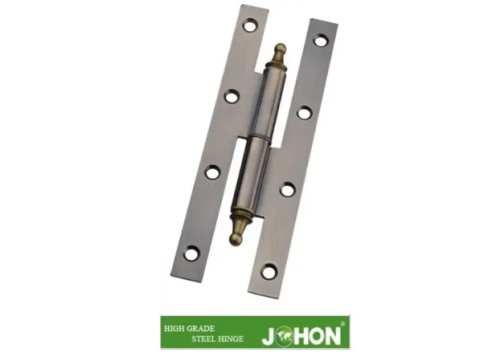
Now that we’ve discussed the key considerations, let’s dive into the most common materials used for hinges. Each has its strengths and is suited for different applications.
Overview
Steel is one of the most widely used materials for making hinges due to its strength and durability. It is particularly well-suited for heavy-duty applications, such as doors, gates, and industrial machinery.
Advantages
Strength: Steel hinges are strong and can support heavy loads, making them ideal for large doors or gates.
Durability: Steel is resistant to wear and tear, which makes it a long-lasting choice.
Versatility: Steel can be used in various environments and is available in different grades, including stainless steel and carbon steel, to suit specific needs.
Disadvantages
Corrosion: Steel, particularly carbon steel, is prone to rust and corrosion if not properly coated or treated. Stainless steel, however, is corrosion-resistant.
Weight: Steel hinges can be heavier than those made from other materials, which may not be ideal for smaller or lighter applications.
Best Uses
Steel hinges are commonly used in industrial settings, large doors, gates, and in situations where strength and durability are paramount. Stainless steel hinges are especially useful in coastal areas where exposure to saltwater increases the risk of rust.
Overview
Stainless steel is an alloy that includes chromium, which gives it corrosion resistance. This makes it one of the best materials for outdoor and marine environments where exposure to moisture is frequent.
Advantages
Corrosion Resistance: Stainless steel offers excellent resistance to rust and corrosion, making it ideal for exterior applications.
Strength: Like steel, stainless steel is very strong and durable, making it suitable for heavy-duty applications.
Aesthetic Appeal: Stainless steel has a sleek, modern appearance that works well in both residential and commercial designs.
Disadvantages
Cost: Stainless steel can be more expensive than other materials like brass or zinc-plated steel.
Scratching: While resistant to rust, stainless steel can scratch easily, leaving marks that may detract from its polished finish.
Best Uses
Stainless steel hinges are widely used in environments exposed to moisture, such as marine applications, outdoor gates, or bathrooms. They are also ideal for commercial and residential doors where a clean, modern appearance is important.
Overview
Brass is an alloy of copper and zinc and is known for its attractive gold-like color. It is commonly used in decorative applications due to its aesthetic appeal and relatively good resistance to corrosion.
Advantages
Aesthetic Appeal: Brass has a beautiful, rich color that adds elegance and warmth to the design, making it ideal for interior doors, cabinets, and furniture.
Corrosion Resistance: Brass naturally resists corrosion, making it suitable for use in indoor settings where moisture may be present.
Disadvantages
Softness: Brass is softer than steel or stainless steel, which means it may not be ideal for heavy-duty applications where strength is critical.
Patina Development: Over time, brass can develop a patina, which may or may not be desirable depending on the design intention.
Best Uses
Brass hinges are commonly used for decorative applications such as cabinet doors, furniture, and antique-style doors. They work well in indoor environments where appearance is a key consideration.
Overview
Aluminum is lightweight, durable, and resistant to corrosion, making it an excellent choice for specific applications that require these properties.
Advantages
Lightweight: Aluminum hinges are much lighter than steel or brass, making them ideal for lightweight doors, windows, or smaller applications.
Corrosion Resistance: Aluminum naturally resists corrosion, which makes it a good choice for outdoor applications and in high-humidity environments.
Cost-Effective: Aluminum is often more affordable than stainless steel or brass.
Disadvantages
Strength: While aluminum is durable, it is not as strong as steel or stainless steel, so it may not be suitable for heavy-duty applications.
Appearance: The appearance of aluminum is typically more utilitarian and may not be as appealing in high-end interior designs.
Best Uses
Aluminum hinges are commonly used for lightweight doors, windows, and in environments that require resistance to corrosion but do not need the strength of steel. They are frequently used in RVs, marine environments, and small enclosures.
Overview
Zinc alloys are often used for their strength and ability to be molded into various shapes. These hinges are typically found in environments where strength and corrosion resistance are needed at an affordable price.
Advantages
Cost-Effective: Zinc alloy is more affordable than materials like stainless steel and brass, making it a good choice for budget-conscious projects.
Corrosion Resistance: Zinc alloys have a good resistance to corrosion, making them suitable for outdoor and moist environments.
Versatility: Zinc alloys are often molded into complex shapes, allowing for a range of hinge designs.
Disadvantages
Strength: Zinc alloys are not as strong as steel or stainless steel, making them less suitable for heavy-duty applications.
Appearance: The finish of zinc alloy hinges may not be as attractive as brass or stainless steel.
Best Uses
Zinc alloy hinges are commonly used in budget-friendly applications such as furniture, light doors, and small gates. They offer a good balance of affordability and durability in light to medium-duty applications.
Choosing the best hinge material depends on several factors:
Load Capacity: For heavy-duty applications like industrial doors or gates, steel or stainless steel is often the best choice.
Environmental Conditions: If your design will be exposed to moisture or extreme weather, materials like stainless steel, aluminum, or zinc alloy offer corrosion resistance.
Aesthetic Preferences: For designs requiring elegance and a decorative touch, brass is often preferred due to its warm golden appearance.
Budget: If cost is a significant consideration, materials like zinc alloy or aluminum may offer an affordable yet functional solution.
Selecting the right hinge material is crucial to ensuring the performance, durability, and appearance of your design. Each material—whether it’s steel, brass, aluminum, or zinc alloy—offers specific advantages that make it ideal for certain applications. By understanding the strengths and limitations of each material, you can make an informed decision that fits your design needs.
At Zhejiang Zhenghong Hardware Co.,Ltd., we specialize in providing high-quality hinges and related components tailored to your specific needs. Whether you are designing doors, cabinets, or other products, our team is here to assist you in selecting the best hinge materials and solutions for your project. Contact us today to learn more about how we can support your design and provide top-notch hinge solutions for your next venture.
 English


