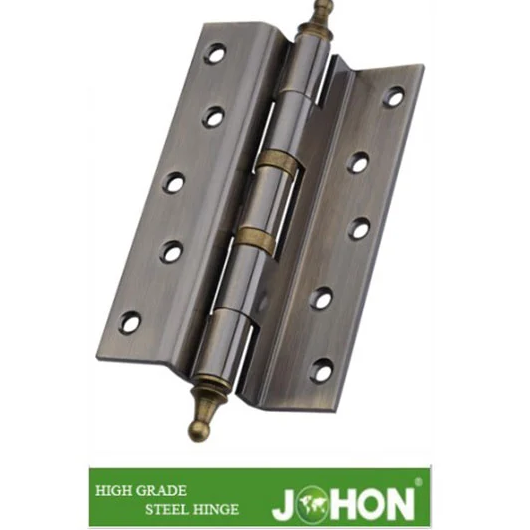
Views: 0 Author: Site Editor Publish Time: 2026-06-28 Origin: Site
Standard flush hinges often fail when you face complex installation environments. Restricted opening angles, strict inset mounting requirements, and tight door clearances create major structural headaches. You need hardware specifically designed to overcome these spatial limitations. A cranked hinge features a prominent bend or offset in the hinge arm. This unique physical geometry actively shifts the pivot point of your door.
Selecting the right component requires you to carefully match the specific crank angle to your exact overlay requirements. We will explore how to balance load capacities against tight spatial restrictions. You will learn exactly how to categorize, evaluate, and install these essential mechanisms for seamless architectural and cabinetry projects.
Cranked hinges feature an intentional bend designed to alter the door's pivot point, enabling wider opening angles or specific door positioning (inset/half-overlay).
In cabinetry, a cabinet cranked hinge dictates how much the door overlaps the cabinet frame, categorized primarily into half-cranked and full-cranked configurations.
In architectural applications, cranked hinges (often referred to as offset hinges or projection hinges) are utilized to clear architraves and meet ADA/accessibility compliance by pulling the door fully out of the frame.
Selecting the correct hinge requires precise measurement of the door overlay, cup depth (for concealed types), and weight distribution to prevent long-term sagging.
Standard straight-arm hinges severely restrict door movement when mounted flush against a cabinet or door frame. The pivot point remains tight against the mounting surface. When you open the door, the back edge swings inward and collides with the frame. This rigid geometry limits your opening angles. It prevents doors from swinging fully out of the way. Thick architraves and adjacent walls easily block full access when you rely solely on straight mechanics.
The "crank" provides an elegant physical solution. Manufacturers introduce a specific bend into the metal leaf. This bend actively alters the pivot geometry. Shifting the pivot point away from the door edge allows the panel to swing completely clear of obstacles. It also enables doors to sit entirely flush within a tightly constrained frame. You gain mechanical leverage precisely where spatial limitations normally prevent smooth articulation.
Terminology often confuses buyers in the hardware market. The term "cranked" simply describes the physical shape of the metal. It refers to a bending door hinge mechanism. This physical bend translates into completely different mounting behaviors depending on your application. Cabinetry relies on cranked shapes to manage door overlays. Heavy architectural doors use them to clear thick frames and widen walkways.
Understanding hinge geometry requires comparing standard profiles against their bent counterparts. Every angle serves a highly specific structural purpose.
You use standard straight arms for full overlay doors. The door completely covers the front edge of the cabinet carcass. The metal arm remains perfectly straight without any bend. We use this 0mm crank design as a fundamental baseline. Understanding the straight arm helps you visualize why bent alternatives are strictly necessary for complex spacing.
You implement half-cranked designs for half overlay doors. This scenario occurs when twin doors share a single central partition panel. The arm features a moderate 9mm bend. This specific angle prevents the two doors from colliding during simultaneous operation. A cabinet cranked hinge with this moderate bend splits the structural load perfectly across the shared center board.
You choose full-cranked hardware for inset doors. The door must sit perfectly flush inside the cabinet carcass, exposing the front edge of the frame. The arm features a deep 17mm bend. This severe crank pushes the door panel sharply inward. It aligns the outer face of the door seamlessly with the outer edge of the frame.
Here is a structural comparison chart detailing the three primary configurations:
Hinge Category | Crank Angle (Bend) | Primary Use Case | Door Position Result |
|---|---|---|---|
Standard / Straight Arm | 0mm | Full Overlay | Covers the entire cabinet frame edge completely. |
Half-Cranked | 9mm | Half Overlay | Covers exactly half the frame. Shares a central partition. |
Full-Cranked | 17mm | Inset | Sits flush inside the frame. Exposes the cabinet edge entirely. |
Structural demands extend far beyond simple cabinetry. Large-scale building projects require heavy-duty hardware to manage complex physical barriers and strict building codes.
Public buildings demand rigorous accessibility standards. Architectural offset hinges act as essential throw-clear devices. They physically move the entire door panel completely out of the frame opening. Standard hinges leave a few inches of the door protruding into the walkway, restricting wheelchair access. A cranked offset design throws the panel flush against the adjacent wall. This maximizes your clearway width and guarantees full ADA compliance without widening the actual door frame.
You must also navigate physical obstacles. Sometimes a door must open a full 180 degrees. Thick architraves, deep wall reveals, and exposed pipework frequently block the swinging path. The extended bent leaf projects the pivot point far enough outward to clear these structural obstructions seamlessly. The door avoids structural damage and operates smoothly.
Certain custom fabrications demand entirely non-standard geometries. You may encounter heavy acoustic doors or bespoke heritage restorations requiring unique pivot points. In these challenging scenarios, you need a special installation hinge. Custom offset angles maintain the structural integrity of massive doors while preserving historical aesthetics or specialized sound-dampening seals.
Selecting the optimal hardware requires strict attention to physical measurements and material physics. Guesswork leads to binding panels and costly structural failures.
Overlay vs. Inset Requirements: This represents your foundational metric. You must measure the exact millimeter coverage required on the cabinet carcass before making a selection. Grab a digital caliper. Measure the board thickness accurately. A one-millimeter error dictates whether your door closes flush or binds against the frame.
Adjustability and Tolerances: Evaluate your hardware based on 3D adjustability. You need vertical, horizontal, and depth adjustment screws. Cheaper hardware completely lacks micro-adjustment capabilities. Inset doors using full-cranked designs demand absolute precision. Any gap variation becomes instantly visible to the naked eye.
Closing Mechanisms: Assess the need for soft-close functionality versus free-swinging features. Integrated dampeners provide a premium feel and prevent slamming. However, dampener mechanisms add physical bulk to the cranked arms. Verify that the housing clears your interior shelving before final installation.
Load capacity requires special attention. A deeper crank angle dramatically alters the weight distribution. The bend introduces a lever effect, increasing torque on the mounting plate. You must calculate the exact number of hinges needed based on door height, overall width, and specific material weight.
Door Height (mm) | Door Weight (kg) | Minimum Hinges Required | Material Warning |
|---|---|---|---|
Up to 900mm | Up to 4-6 kg | 2 Hinges | Standard MDF / Plywood is safe. |
900mm - 1600mm | 7-12 kg | 3 Hinges | Solid wood requires careful plate anchoring. |
1600mm - 2000mm | 13-17 kg | 4 Hinges | Heavy oak or glass inserts risk sagging. |
2000mm - 2400mm | 18-22 kg | 5 Hinges | Tall pantry doors need maximum load distribution. |
Even premium hardware fails if your installation technique is flawed. The complex geometry of bent hinges amplifies minor mounting errors.
Routing and cup depth errors destroy functionality instantly. Drilling the hinge cup too close to the door edge nullifies the precise offset built into the hardware. Drilling too far away prevents the door from opening past 90 degrees. We strongly advise using precision hinge jigs. Never eyeball the boring distance. A jig ensures identical cup placement across every single door front.
You face constant risks of binding and clearance clashes. Doors bind tightly on the hinge side if the crank angle mismatches the mounting plate thickness. A full-cranked hinge paired with a 3mm drop plate will push an inset door too far inward. Always test the specific plate thickness against your board dimensions. Common mistakes occur when builders reuse old mounting plates with entirely new hardware.
Sagging over time plagues improper installations. Full-cranked designs bear physical weight completely differently than straight arms. The 17mm bend creates a longer lever arm. This pulls heavily on the top mounting plate. You must never use insufficient hinges on tall pantry doors or solid wood custom builds. Always add one extra mechanism if your door weight borders on the maximum recommended load.
Navigating the sheer volume of available hardware requires a systematic approach. Follow this strict sequence to eliminate incompatible options quickly.
Step 1: Identify the Door Position. Determine immediately if your project requires a full overlay, half overlay, or a flush inset setup. If working on interior walkways, decide if you require an architectural throw-clear action.
Step 2: Measure Cabinet Carcass Thickness. Grab your calipers. Measure the exact board thickness. Ensure your selected crank angle perfectly matches either 16mm or 18mm standard boards.
Step 3: Select Hinge Grade. Choose commercial-grade steel configurations for high-traffic environments or heavy solid wood panels. Standard zinc-plated models suffice for lightweight residential MDF applications.
Step 4: Verify Plate Compatibility. The mounting plate dictates the final geometry. Remind yourself that you must pair the hardware with the correct plate drop (0mm, 2mm, or 3mm). The combination of the bent arm and the plate drop creates the final door alignment.
Cranked hinges are not universally interchangeable components. They serve as highly specific structural problem-solvers for spatial restrictions and functional limitations. The precise geometric bend allows you to manipulate pivot points, manage intricate overlays, and guarantee ADA compliance in complex architectural spaces.
We highly recommend testing your hardware choices. Always install a single hinge and mounting plate combination on a scrap piece of material. Verify the swing path and gap tolerances before you batch-drill expensive custom door fronts. Proper planning eliminates binding issues and ensures flawless, long-lasting articulation.
A: Only if you are fundamentally changing the door's overlay. For example, modifying a full overlay door to become an inset door requires this swap. They are not functionally interchangeable without adjusting the door size. You will create severe binding or massive gaps otherwise.
A: In cabinetry, they generally refer to the exact same thing. In architectural hardware, "offset" usually refers to heavy-duty door hinges that throw the door completely clear of the frame. "Cranked" specifically describes the bent leaf design itself.
A: Look closely at the cabinet edge. If the door shares a central side panel with another door, you must use half-cranked. If the door sits completely inside the cabinet frame to create a flush surface, use full-cranked.
 English