Views: 0 Author: Site Editor Publish Time: 2026-06-22 Origin: Site
Wholesale procurement of hardware for large-scale developments requires extensive planning. You must constantly balance favorable unit economics against strict architectural standards. Every single detail matters immensely when outfitting entire commercial or residential buildings.
Specifying the wrong hardware at a massive scale directly leads to widespread code violations. You also risk premature hardware failure under heavy, frequent daily traffic. These easily avoidable mistakes inevitably cause significant and frustrating project delays.
This comprehensive guide provides a detailed technical evaluation framework for bulk-ordering door hinges. We effectively bridge the gap between demanding architectural requirements and actual supplier capabilities. You will thoroughly understand how to match materials, calculate loads, and vet partners.
Hinge selection must align with ANSI/BHMA grading, door weight, and expected daily traffic frequency.
Material choice (e.g., steel vs. stainless) dictates both environmental durability and total project cost.
Accurate load-bearing calculations dictate the size and number of hinges per door, preventing long-term sagging.
Vetting a door hinge manufacturer requires auditing their lead times, minimum order quantities (MOQs), and quality assurance protocols.
Categorizing doors by their expected daily cycles represents the first crucial step. Standard residential bedrooms might see twenty open-and-close cycles daily. Heavy-duty commercial corridors easily exceed hundreds of cycles daily. You must assign cycle expectations to every doorway. Low-frequency entryways tolerate standard pin mechanisms. High-frequency entryways demand robust bearing assemblies to prevent rapid wear. Identifying these differences early prevents underspecifying critical access points. We always recommend building a detailed frequency map for the entire floor plan.
Best Practice: Always map traffic frequency during the initial schematic design phase.
Common Mistake: Upgrading panel materials while leaving hardware specified at a low-frequency residential grade.
Establishing exact parameters ensures proper hardware specification. You must document door height, width, and thickness before evaluating any hardware catalogs. Heavy solid-core wood demands significantly more support than hollow metal. Thicker profiles require wider hardware leaves to clear the surrounding trim. A minor miscalculation in door width creates binding issues later. These baseline dimensions directly dictate your hardware size formulas. Never rely on estimates when ordering components for hundreds of entryways.
Best Practice: Create a standardized hardware schedule template for your procurement team.
Common Mistake: Ignoring the added weight of architectural cladding or security components.
Identifying interior versus exterior applications sets your corrosion resistance baseline. Exterior environments expose hardware to rain, humidity, and temperature swings. Interior climate-controlled spaces present very few environmental threats. Coastal projects face intense salt-spray exposure. Industrial facilities might introduce airborne chemical corrosives. You must match the metal alloy to these specific environmental threats. Failing to account for environmental exposure guarantees rapid rusting and structural failure.
Best Practice: Request regional weather data reports for exterior entryways.
Common Mistake: Assuming standard zinc plating survives coastal humidity.
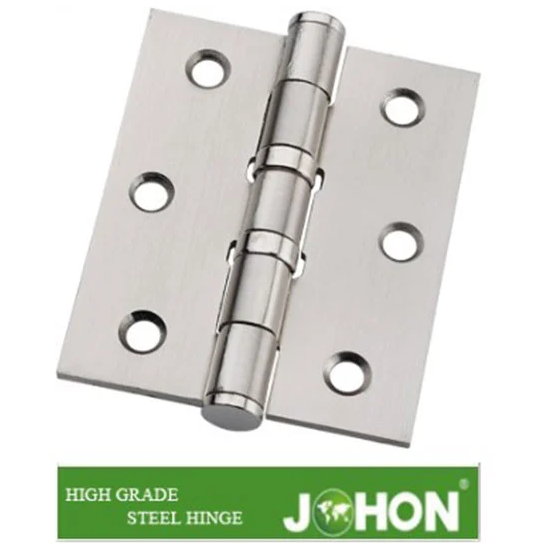
Steel door hinges remain the industry standard for most interior applications. They deliver exceptional physical strength. They also provide a highly cost-effective solution for bulk installations. However, raw steel rusts quickly when exposed to moisture. It requires proper protective plating. Common finishes include zinc plating, brass plating, or powder coating. You should restrict steel components strictly to interior, climate-controlled environments.
Best Practice: Specify powder-coated finishes for high-moisture interior areas like commercial bathrooms.
Common Mistake: Installing raw steel components before completing wet trades like drywall taping.
Stainless steel is entirely mandatory for exterior entryways. Coastal environments and highly corrosive industrial settings also require this durable metal. We primarily evaluate two specific grades for commercial use. Grade 304 handles most standard exterior moisture challenges well. Grade 316 provides superior resistance against harsh salt-spray and heavy chemicals. Stainless steel costs more upfront. However, it prevents catastrophic structural degradation in challenging environments.
Best Practice: Require passivation documentation to ensure superior surface rust prevention.
Common Mistake: Mixing stainless hardware with carbon steel screws, causing rapid galvanic corrosion.
Architects select brass and bronze primarily for high-end aesthetic appeal. These metals offer beautiful, warm finishes for luxury residential or boutique commercial spaces. They resist corrosion naturally. Unfortunately, they lack the raw tensile strength of steel or stainless alloys. You must carefully evaluate their specific load-bearing limits. Heavy entryways often require thicker brass plates or additional hinge counts. Always compare their structural limits directly against standard steel equivalents.
Best Practice: Utilize these materials strictly for executive suites or low-traffic luxury entryways.
Common Mistake: Specifying solid brass hardware on heavy solid-core entryways without upgrading the hinge count.
Heavy-duty ball bearing assemblies are the default choice for commercial environments. They utilize permanently lubricated bearings between the knuckles. This design dramatically reduces friction during operation. They handle heavy, frequent-use entryways effortlessly. Standard friction knuckles wear down rapidly under similar loads. Ball bearing designs ensure smooth, silent operation over millions of cycles. You should specify them for any entryway exceeding standard residential traffic levels.
Best Practice: Mandate bearing upgrades for any entryway exceeding 400 daily cycles.
Common Mistake: Using standard friction knuckles on emergency exit routes.
Modern architectural designs frequently specify concealed hardware. Designers value the clean, uninterrupted lines they create. You must carefully evaluate the necessary trade-offs. Concealed hardware requires deep, highly precise routing into the frame and panel. This routing demands specialized installation expertise and extra time. Not all frames provide enough depth to house the complex internal mechanisms. You must ensure your installation crews possess the required skills before ordering these components.
Best Practice: Provide a mock-up frame for your carpentry team before site-wide installation.
Common Mistake: Failing to account for the maximum opening angle restricted by deep frame routing.
Sometimes standard hardware catalogs fail to meet specific project needs. Unique pivot points often require bespoke engineering. Historical restoration projects usually demand highly specific profiles. In these scenarios, you need custom door hinges. Sourcing custom hardware involves designing bespoke tooling. You must account for extended lead times. Always collaborate closely with your manufacturer to validate the engineered drawings before authorizing full production runs.
Best Practice: Request 3D printed prototypes to verify pivot points before cutting metal.
Common Mistake: Approving engineering drawings without consulting the on-site installation manager.
The American National Standards Institute (ANSI) and Builders Hardware Manufacturers Association (BHMA) define strict performance standards. You must differentiate between their primary lifecycle testing grades. Grade 1 designates heavy commercial use, surviving millions of cycles. Grade 2 covers standard commercial and heavy residential applications. Grade 3 fits standard residential environments. We strongly advise matching these grades directly to your earlier traffic frequency calculations.
ANSI/BHMA Grade | Application Level | Minimum Cycle Testing |
|---|---|---|
Grade 1 | Heavy Commercial | 2,500,000 cycles |
Grade 2 | Standard Commercial | 1,500,000 cycles |
Grade 3 | Standard Residential | 350,000 cycles |
Best Practice: Demand independent laboratory test reports validating BHMA compliance.
Common Mistake: Accepting generic quality claims without official ANSI certification.
Fire-rated entryways demand rigorously tested and certified hardware. You must evaluate all components for strict Underwriters Laboratories (UL) compliance. Fire codes generally mandate steel or stainless steel materials. Brass and bronze melt too quickly during active fires. Many fire codes also place restrictions on certain ball-bearing materials. Always verify the hardware certification matches the specific hourly fire rating of the entryway assembly.
Best Practice: Photograph the UL stamps on the hardware during installation for safety documentation.
Common Mistake: Installing field-modified hardware, which instantly voids the official fire rating.
The Americans with Disabilities Act (ADA) enforces strict opening-force regulations. Your hardware selection directly impacts these physical forces. Heavy panels paired with high-friction standard knuckles easily exceed the allowable resistance limits. Ball-bearing assemblies reduce operational friction significantly. You must ensure the combined hardware weight and friction maintain compliant opening forces. Non-compliant entryways lead to severe legal liabilities and forced remediation.
Best Practice: Use a digital force gauge to verify opening resistance during final walkthroughs.
Common Mistake: Assuming lightweight panels automatically meet ADA standards while ignoring knuckle friction.
Selecting the correct size requires a simple but strict mathematical approach. You must match the panel thickness and width to the correct hardware height. Thicker panels demand taller knuckles to distribute weight evenly. You also need to calculate the open-width clearance. The hardware leaves must project far enough to allow the panel to clear adjacent trim when fully open. Using a standardized sizing formula prevents binding and frame damage.
Best Practice: Consult the manufacturer's open-width clearance charts before confirming sizes.
Common Mistake: Ordering narrow leaves which cause the panel to crush the surrounding casing.
Determining the correct quantity prevents long-term sagging. The industry utilizes a standard rule of thumb. You need one hinge unit for every 30 inches of height. We have outlined this in the straightforward sizing chart below.
Door Height | Recommended Quantity |
|---|---|
Up to 60 inches | 2 Hinges |
60 to 90 inches | 3 Hinges |
90 to 120 inches | 4 Hinges |
Excessively wide or unusually heavy panels represent exceptions to this rule. You should add extra support components to handle the added lateral stress in these specific scenarios.
Best Practice: Add one extra hinge unit for panels exceeding 36 inches in width.
Common Mistake: Reducing hardware counts to save money, resulting in massive repair bills later.
Bulk installation phases introduce numerous physical risks. You must carefully address frame reinforcement needs. Heavy panels easily rip standard fasteners out of unreinforced hollow metal frames. Fastener pull-out risks threaten the integrity of the entire entryway. Ensure your installation teams use properly specified backing plates. Addressing these structural risks early prevents catastrophic hardware failures after the building opens to the public.
Best Practice: Specify continuous steel reinforcement channels inside hollow metal frames.
Common Mistake: Using standard wood screws in composite frames.
You must align your order volume with the supplier's actual minimums. Evaluating a door hinge manufacturer starts with reviewing their batch-run capabilities. Some suppliers require massive Minimum Order Quantities (MOQs). Others accommodate smaller, staggered batch deliveries. You need a partner capable of scaling production to match your construction phases. Overlooking production capacity often leaves construction teams waiting for critical components.
Best Practice: Negotiate staggered delivery drops matching your construction phases.
Common Mistake: Committing to massive single-drop deliveries without securing adequate on-site storage.
Request comprehensive documentation regarding quality assurance. A reputable supplier readily provides salt-spray testing results for their finishes. They also share cycle testing data proving longevity. You should evaluate their tolerance consistency across different production batches. Inconsistent machining leads to misaligned hardware and frustrating installations. Strict quality control protocols guarantee every piece performs exactly as specified.
Best Practice: Request physical finish samples before approving the entire batch.
Common Mistake: Overlooking tolerance variations between the first and final production runs.
Assessing fulfillment logistics is paramount when ordering wholesale door hinges. You must weigh the benefits of domestic versus overseas manufacturing. Overseas fulfillment often offers better unit economics. However, it introduces significant shipping delays and customs risks. Domestic suppliers provide faster turnaround times. You should always require suppliers to maintain adequate buffer stock. This safety net severely limits the risks of delayed project phases.
Best Practice: Mandate a 10% buffer stock held at the local distribution center.
Common Mistake: Relying entirely on "just-in-time" overseas shipping schedules during peak seasons.
You must structure a comprehensive Request for Quote (RFQ). A vague RFQ attracts underqualified vendors. Your document must clearly define exact dimensions, required ANSI grades, and specific material alloys. You should also outline rigid delivery schedules. Clear expectations weed out suppliers incapable of meeting your strict demands. A highly detailed RFQ serves as the robust foundation for a successful procurement partnership.
Best Practice: Include penalty clauses for missed delivery milestones in your final contract.
Common Mistake: Sending broad RFQs without attaching specific architectural door schedules.
Successful wholesale procurement relies entirely on strict adherence to technical parameters. You cannot afford to guess when outfitting hundreds of entryways. Rely on load calculations, material science, and certified grading to guide your decisions.
Take these critical action steps before proceeding:
Finalize all architectural door schedules before contacting any suppliers.
Cross-reference every single entryway with required ANSI/BHMA grading standards.
Calculate precise load-bearing requirements for oversized or excessively heavy panels.
Initiate highly detailed RFQs only with manufacturers who prove strict quality assurance.
Following this precise evaluation framework ensures you source durable, compliant, and perfectly matched hardware for your entire project.
A: Measure the door's thickness and width. Thicker and wider doors require taller hinges with wider leaves to clear the frame trim. Consult standard manufacturer sizing charts to match these dimensions. Always calculate the total weight to ensure the selected size supports the heavy load without sagging over time.
A: Grade 1 hinges are engineered for heavy commercial applications, tested to withstand 2.5 million operating cycles. Grade 2 hinges handle standard commercial traffic, tested to 1.5 million cycles. Choose Grade 1 for main entrances and busy corridors, and Grade 2 for private offices or low-traffic rooms.
A: Specify stainless steel for exterior doors, coastal environments, or industrial facilities. Stainless steel resists harsh weather, salt spray, and chemical corrosion effectively. Standard steel rusts quickly when exposed to moisture, making it suitable exclusively for interior, climate-controlled environments.
A: Yes, capable manufacturers can modify standard designs or engineer bespoke tooling. Custom modifications accommodate unique pivot points, historical restoration profiles, or unconventional door weights. Always account for longer production lead times and higher minimum order quantities when requesting these specialized modifications.
A: Fire codes strictly prohibit materials that melt at low temperatures, such as brass or bronze, on fire-rated assemblies. You must use steel or stainless steel hardware. Additionally, specific codes restrict certain ball-bearing materials. Always verify the hardware carries the appropriate Underwriters Laboratories (UL) certification.
 English