Views: 0 Author: Site Editor Publish Time: 2026-06-30 Origin: Site
Specifying the correct hinge for high-traffic, heavy-duty, or frequently accessed environments is critical. Selecting the wrong mechanism leads to premature door failure, compromised security, or costly maintenance bottlenecks. While standard butt hinges serve general purposes, specialized applications require specialized hardware. Buyers often narrow their choices down to flag hinges and lift-off hinges.
Both components offer distinct mechanical advantages depending on the physical environment. However, making the wrong choice frequently results in misaligned frames or unacceptable security vulnerabilities. This guide strips away marketing claims to provide an objective, engineering-focused comparison, helping procurement and project managers match the precise structural requirements of their doors to the correct hinge mechanics. You will learn the core differences in load distribution, maintenance speed, and long-term hardware adjustability.
Flag hinges excel in heavy-duty load bearing and multi-axis adjustability, making them the standard for uPVC and metal commercial doors.
Lift-off hinges prioritize rapid, tool-less door removal for maintenance, cleanrooms, and tight-clearance access panels.
Removable flag hinges exist as a hybrid solution, though they often require structural compromises compared to dedicated single-purpose hinges.
Security profiles differ drastically: standard lift-off hinges pose a risk on outward-opening exterior doors unless specific security pins or locking mechanisms are specified.
Understanding how forces travel through a doorway is the first step in hardware selection. Structural failures often occur when we misunderstand how different mechanisms transfer sheer and lateral loads across a frame.
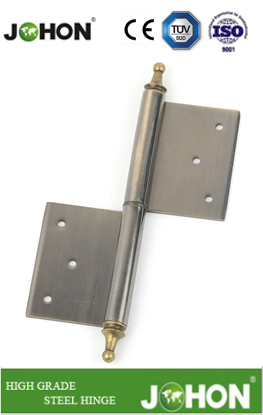
Designers attach a leaf shaped like a flag directly to a vertical pin, giving this hardware its descriptive name. During a standard installation process, technicians mount one leaf to the door face and secure the corresponding leaf to the frame. This face-mounted orientation contrasts sharply with traditional edge-mortised installations. You will quickly notice how this design increases the visible footprint of the hardware.
The core function revolves around distributing massive lateral loads securely over a wide surface area. Manufacturers build flag hinges specifically for demanding commercial environments. A major engineering advantage is their built-in 3D adjustability. Installers can easily manipulate height, weather-seal compression, and lateral movement without taking the door off its frame. This micro-adjustability prevents heavy doors from dragging over time.
These components operate on a simpler, uncoupled mechanical principle. The design comprises a male leaf featuring an integrated, upward-pointing pin. The opposing female leaf contains a hollow cylindrical barrel. When joined, they form a highly functional pivot point.
Their primary function enables rapid physical detachment. Once a user opens the door past a specific clearance angle, they can lift the panel vertically off the frame. This eliminates the tedious need to unscrew any hardware. Such mechanics prove invaluable when moving bulky equipment. Incorporating a special door hinge like this simplifies routine maintenance workflows significantly.
We must evaluate hardware across strict operational criteria. Different facilities prioritize different performance metrics, so understanding these core dimensions ensures a successful installation.
Flag hardware delivers superior load-bearing capabilities. The wide leaf footprint spreads out shear forces effectively. This wide distribution makes them ideal for heavy metal gates, thick glass-panel commercial entrances, and high-impact corridors. They comfortably handle the constant stress of public access ways.
Conversely, slip-joint models generally support lower weight thresholds per unit. The two-piece uncoupled design inherently concentrates stress squarely on the single male pin. If you must hang heavy industrial doors, you require specialized heavy-duty lift-off variants. Furthermore, you need exceptionally precise vertical alignment across all hinges to prevent the pins from binding under high loads.
Lift-off mechanisms represent the definitive choice for dynamic, fast-paced environments. Hospital wings, sanitary food-processing zones, and server utility rooms demand frequent equipment movement. Facility managers rely heavily on them for rapid, tool-less door removal. A common best practice in cleanrooms involves using these mechanisms to quickly remove doors for deep chemical sanitation.
Flag hardware proves much slower to detach completely. While their on-frame adjustability is remarkably high, full removal requires tools, ladders, and significant downtime. If a doorway requires weekly or monthly panel removal, face-mounted flag units will create severe operational bottlenecks.
Building settlement happens universally. Over time, frames shift and doors sag. Flag hardware shines in these realistic scenarios. Most models allow precise micro-adjustments using a simple Allen key. Maintenance teams can easily correct a dropping door or restore tight weather seal compression in minutes, extending the door's functional lifespan.
Lift-off variants offer low to zero post-installation adjustability. They require perfect initial alignment during construction. Any subsequent building shift might cause the male pin to bind aggressively inside the female barrel. A common mistake during installation is failing to plumb the frame perfectly, causing immediate friction issues.
Evaluation Dimension | Flag Hinge Profile | Lift-Off Hinge Profile |
|---|---|---|
Load Capacity | High (Distributed over wide leaf) | Moderate (Concentrated on central pin) |
Removal Speed | Slow (Requires designated tools) | Fast (Tool-less vertical lift) |
3D Adjustability | High (Micro-adjustments available) | None (Fixed physical position) |
Primary Use Case | Heavy exterior commercial doors | Maintenance and sanitary access panels |
Facility managers often face conflicting environmental requirements. A doorway might need high structural support daily but still require occasional removal for seasonal equipment swaps. Here, we examine the hybrid approach to see if it solves this common dilemma.
Manufacturers developed removable flag hinges to satisfy both demands simultaneously. These units retain the recognizable face-mounted aesthetic and base load support. They provide better lateral frame support than standard slip-joint models while allowing pin extraction for occasional detachment.
While they sound perfect on paper, the physical reality introduces engineering compromises. The removable pin mechanism naturally introduces a potential failure point under extreme shear stress. When you compare a removable variant to a solid, fixed-pin iron flag hinge, the fixed version consistently wins in pure load endurance. Tolerances around a removable pin inherently allow microscopic vibrations. Over thousands of open-close cycles, these vibrations accelerate metal wear.
Reserve these hybrid components strictly for semi-permanent installations. They excel in seasonal enclosures, temporary acoustic partitions, or exhibition halls. They fit perfectly into scenarios where removal happens infrequently, yet standard slip-joint hardware lacks the required structural integrity. A common best practice is inspecting the removable pins annually for stress fractures.
Ignoring security protocols and operational risks during hardware specification leads to costly vulnerabilities. You must align the hardware choice with your facility's safety mandates.
Installing standard lift-off hardware on an outward-opening exterior door creates a massive security flaw. Intruders can easily defeat the entrance by simply lifting the door vertically off the frame. To mitigate this severe risk, you must specify security studs or safety setscrews. These additions securely lock the two leaves together when the door closes, preventing unauthorized detachment.
Flag hardware remains inherently more secure by design. Engineers often build them with concealed fixings. When the door remains closed, the mounting screws sit securely hidden behind overlapping metal plates. This completely prevents tampering from the outside.
Slip-joint mechanisms are strictly handed. You must specify Left-Hand or Right-Hand configurations during your initial procurement phase. The male pin must always face upward on the frame to fight gravity. Incorrect specification immediately halts site installation and delays project timelines.
Conversely, many modern flag door hinges feature universal or reversible designs. This greatly simplifies bulk ordering. Reversible hardware reduces site errors and prevents contractors from stalling due to incorrect parts.
Slip-joint components in high-cycle doorways frequently suffer from severe pin-grinding. If maintenance teams fail to adequately lubricate the barrel, the resulting metal-on-metal friction destroys the joint rapidly. A common mistake is using incorrect grease, which attracts dust and accelerates degradation.
Traditional flag hardware distributes kinetic friction far more evenly. Premium units often utilize low-friction nylon or brass bushings wrapped around the central pin. These specialized bushings absorb kinetic stress quietly and dramatically extend the component's functional lifespan.
Making the final decision requires matching your operational facts to the physical constraints of the building. Let us break down the exact scenarios to help you shortlist the right hardware efficiently.
Follow these strict guidelines for heavy-duty applications:
Specify them for exterior commercial doors and heavy residential entryways, especially those constructed from uPVC or dense composite materials.
Use them heavily in environments where building shifting might necessitate future door alignment tweaks.
Always select them for high-security outward-opening doors to prevent easy tampering.
Consider the following operational scenarios for slip-joint mechanisms:
Interior hospital or cleanroom doors requiring stringent, frequent sanitary wash-downs.
IT server rooms and utility panels demanding rapid, unhindered maintenance access.
Narrow corridors where doors must be routinely removed to allow the safe passage of oversized machinery.
Always match the material to the local environment. Use marine-grade 316 stainless steel for corrosive, coastal, or highly sanitary environments to prevent rust. For high-load industrial gates swinging hundreds of pounds daily, rely on heavy-duty iron variants. Iron provides unmatched rigidity against aggressive sheer forces, ensuring the gate remains plumb over years of hard use.
The choice between flag and lift-off hinges is rarely a matter of preference, but a strict adherence to operational requirements. Prioritize load and adjustability with flag hinges; prioritize speed of access and removability with lift-off hinges. While hybrid removable variants offer middle-ground utility, they carry minor structural trade-offs you must account for.
Your actionable next step involves reviewing the specific door weight, outward versus inward swing trajectory, and security compliance requirements of your current project before finalizing the hardware schedule. Always request detailed CAD models or structural testing data from manufacturers for non-standard loads to guarantee performance.
A: Generally, no, without significant modification. Flag hinges mount differently compared to the mortised installation of standard butt hinges. They often require face-mounting or specific frame routing. Transitioning between the two typically demands replacing the door frame or conducting extensive carpentry adjustments to ensure a secure fit.
A: Yes, the vast majority are specifically left-handed or right-handed because the male pin must face upward on the door frame to function correctly. If you order the incorrect handing, gravity will prevent the components from assembling, making door installation impossible.
A: While capacities vary by manufacturer, heavy-duty iron or steel flag hinges can comfortably support doors exceeding 100kg (220 lbs) when specified in sets of three. This massive load distribution makes them vastly superior for high-load industrial applications and oversized commercial panels.
A: They can, particularly if installed on outward-opening doors without security pins. An intruder could potentially drive the pin out and easily remove the panel. Always specify hardware models featuring concealed, locked, or anti-tamper pins when outfitting exterior security doorways.
 English